Boston, MA Neighborhood Guide: Walkable Condo and Townhome Living for Young Professionals
Explore Boston’s high-energy vibe: 83 Walk Score, $777.5K median condo price, 11.6 months of supply, MBTA access, and historic brownstones.
Written ByAndrew McKinney
PublishedOctober 17, 2026
I'm Andrew McKinney, a JD/MBA attorney and broker helping buyers and sellers in Boston, Newton, Cambridge and beyond. Let's talk, from first search to closing. Serving Boston, Brookline, Cambridge, Arlington, Needham, Newton, Waltham, Lexington, Wellesley, Medford, Dedham, Westwood and Natick, MA.
Boston, MA
Region
10
Villages
In July 2026, the median sale price for homes in Boston, MA was $872,000, up 6.3% from a year earlier.
Boston fits a world-class economy, nearly four centuries of history, and one of the most walkable urban cores in the country into roughly 50 square miles. If you're a young professional weighing your first condo, a townhome, or simply a smarter rental, this guide covers what matters most: the city's energy, its housing stock, where people spend their free time, and how they get around.
Is Boston, MA a good place for young professionals to live?
Yes. Boston ranks among the strongest cities in the country for ambitious young professionals. It pairs a dense, walkable core with a deep job market in finance, tech, biotech, and medicine. It also holds on to the historic character that sets it apart from other major metros.
The city is home to roughly 670,000 residents and ranks as the 6th most educated city in the U.S. You feel that talent base everywhere. Harvard, MIT, Boston University, and Boston College send a steady stream of graduates into the Financial District, the labs of Kendall Square, and the Longwood Medical Area. The result is a young, driven population and a social calendar crowded with networking events, run clubs, trivia nights, and weekend brunches where you'll wait for a table.
What is the vibe like in Boston, MA: busy or quiet?
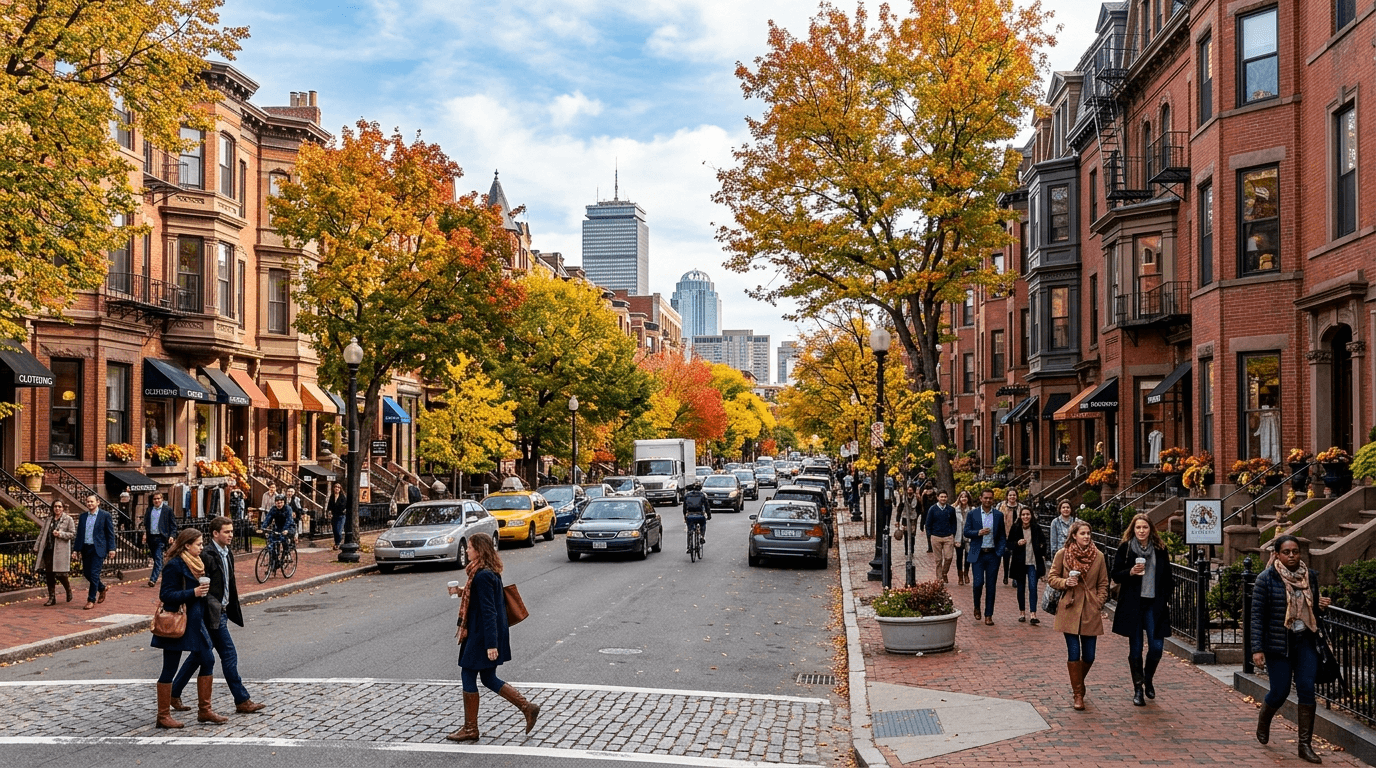
On weekdays, Boston's core is busy and high-energy. At night and on weekends, many residential pockets slow to a calmer, almost village-like pace. You can spend the day in a glass tower in the Seaport, then walk home to a gas-lit, brick-lined street in Beacon Hill or the South End.
Here's what young professionals tend to love:
•Walkability. With a Walk Score of 83, most errands, workouts, and dinners in Boston don't require a car.
•Distinct neighborhoods. Each one has its own personality, from the polished brownstone blocks of Back Bay to the creative, easygoing streets of Jamaica Plain.
•Green space. Boston Common, the Public Garden, and the Emerald Necklace offer genuine outdoor room right in the middle of the city.
•Sports culture. Between Fenway Park, TD Garden, and a famously loyal fan base, game days become citywide events.
What are the downsides of living in Boston, MA?
The main trade-offs are cost, winter, and space. Boston's cost of living runs about 47% higher than the national average. Winters are long, and daylight is scarce from December through February. Apartments and condos tend to be smaller than what you'd find in Sun Belt cities. Nightlife is more restrained than New York's, with most bars closing by 2 a.m. And parking and traffic on narrow colonial streets will test anyone's patience.
When I walk clients through Back Bay or the South End, I tell them all the same thing: Boston rewards people who commit to city living. Embrace walking, the T, and a slightly smaller footprint, and the lifestyle payoff is enormous.
What are condos and townhomes like in Boston, MA?
For young professionals, Boston housing generally falls into two camps: historic brick brownstones and rowhouses converted into condos, and modern high-rise or mid-rise buildings with full-service amenities. Most buyers in this group end up choosing between character and convenience.
What architectural styles will I find in Boston, MA?
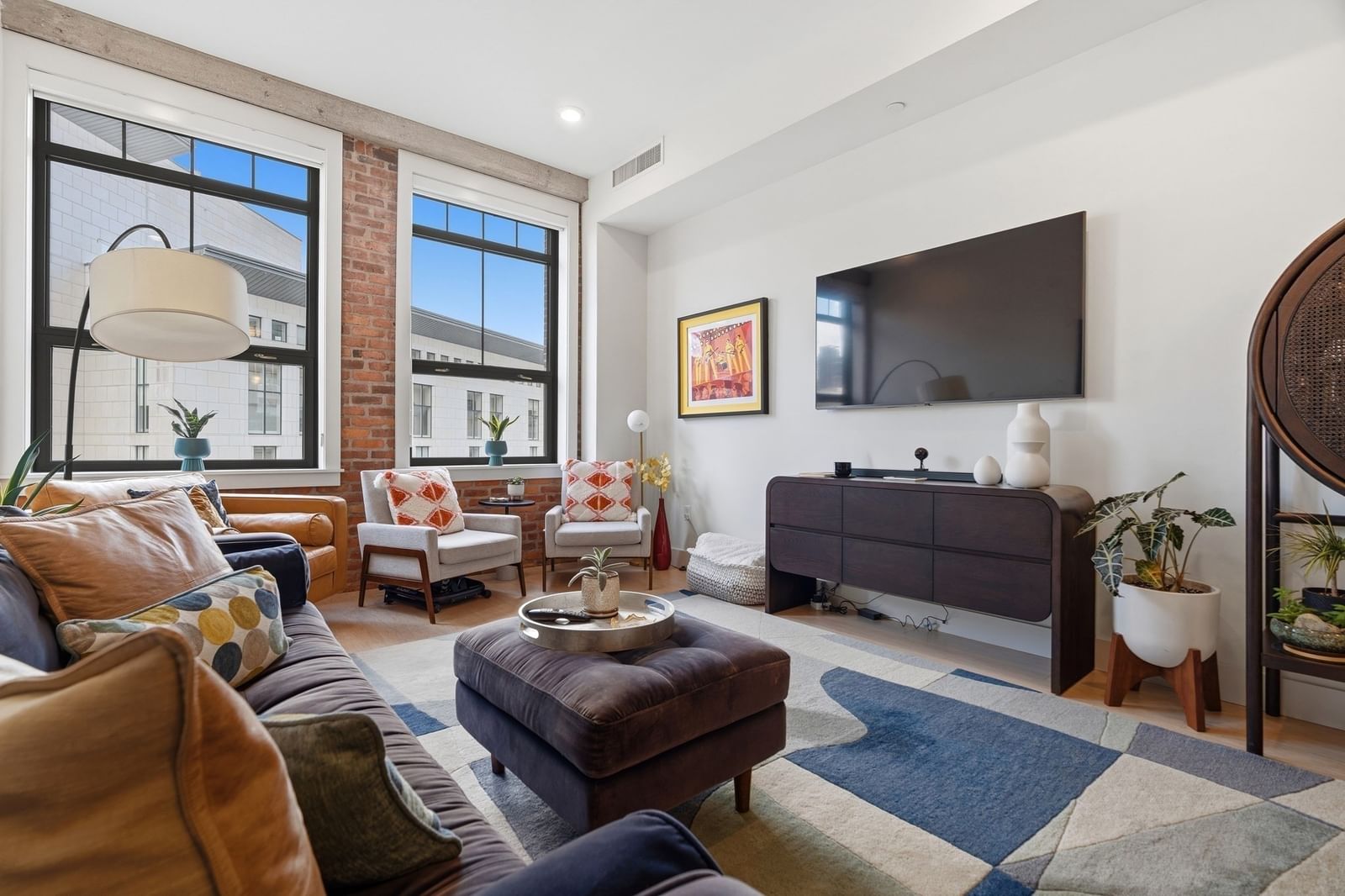
•Victorian brownstones and bowfront rowhouses. These define Back Bay, the South End, and parts of Beacon Hill. Most have been divided into 3 to 6 condo units, often featuring renovated kitchens, exposed brick, original fireplaces, and bay windows. Top-floor units sometimes include roof decks, while garden-level units often come with private patios.
•Triple-deckers. Common in South Boston, Dorchester, Jamaica Plain, and East Boston, these are the classic Boston three-family homes. They're usually converted into one condo per floor, frequently have porches, and tend to deliver more square footage per dollar.
•Contemporary towers. The Seaport, Midtown/Downtown, and the Fenway corridor are lined with glass-and-steel buildings offering concierge service, gyms, roof decks, and garage parking.
•Mid-century and brick walk-ups. You'll see plenty of these in Brighton, Allston, and Fenway. They're often the most accessible entry point for first-time buyers.
What are typical lot sizes and unit sizes in Boston, MA?
Plan on efficient footprints, not yards. Brownstone lots in Back Bay and the South End are narrow and deep, typically just 20 to 25 feet wide. Recent citywide condo data puts the median living area at about 1,076 sq ft, and many one-bedrooms come in well under 800 sq ft. The upside? A low-maintenance, lock-and-leave lifestyle. No lawn to mow, no snow to shovel in most professionally managed buildings, and more time for everything else.
How much do condos and townhomes cost in Boston, MA right now?
As of July 2026, the median sold price for a Boston condo/townhouse was $777,500, with a median of 45 days on market and 11.6 months of supply (MLSPIN data). That's a high inventory level. The month saw 3,498 active condo listings against just 218 closed sales.
Here's how the property types compare as of July 2026:
Data Table
Property Type
Median Sold Price
Median DOM
Months of Supply
Condo/Townhouse
$777,500
45 days
11.6
Single-Family
$1,107,500
34 days
6.1
Multi-Family
$1,225,000
32 days
6.5
All Types
$879,000
43 days
10.7
Put simply, condo buyers have real leverage right now. Supply is deep and homes are sitting longer, so well-prepared buyers can negotiate on price, closing costs, or repairs in ways that weren't realistic a few years ago.
Boston July 2026 Market Snapshot by Property Type
Primary MLSPIN/Repliers figures for Boston, MA as of July 2026. The condo/townhouse card uses the same figures cited in the article: $777,500 median sold price, 45 median days on market, 11.6 months of supply, 3,498 active listings, and 218 closed sales.
Prices vary sharply from one neighborhood to the next. Back Bay one-bedroom condos typically start around $800,000, while South End condos range from roughly $700,000 to $2 million+. Brighton tends to sit well below the citywide condo median: Brighton Center condos run about $400K to $700K, and Cleveland Circle one-bedrooms start near $450K.
What do HOA fees typically look like in Boston, MA condos?
The average Boston condo HOA runs about $575/month, and average condo insurance comes to roughly $2,100/year. Both can climb. One 2026 analysis assumes 6% annual HOA increases, 8% annual insurance increases, and an average special assessment of $15,000. Under those assumptions, non-mortgage carrying costs total roughly $198,869 over ten years, or about $1,657/month on average.
A mixed-unit ownership-cost card for Boston condo buyers, highlighting projected non-mortgage carrying costs, HOA/insurance growth assumptions, and the year-10 HOA estimate.
This is where a lot of first-time buyers get caught off guard. Before my clients commit to a unit, we go through the condo docs, the master insurance policy, the reserve fund, and recent meeting minutes line by line. A small brownstone association with thin reserves and an aging roof can be a much riskier purchase than its listing photos suggest. Larger buildings also have to plan for BERDO 2.0, Boston's emissions ordinance, which carries a 2030 compliance deadline and a 2050 net-zero target. The cost of those upgrades can find its way into your monthly fee.
Should I rent or buy in Boston, MA as a young professional?
It depends on your timeline, but if you plan to stay five years or more, buying can come close to the cost of renting. Consider one 2026 Brighton example: a 767 sq ft one-bedroom listed at $449,000 with a $509/month HOA. At a 6.5% rate with 20% down, it works out to about $3,262/month. Comparable one-bedroom rentals nearby run $2,800 to $3,500/month. For context, 30-year fixed rates stood at 6.47% in mid-June 2026, down from 6.81% a year earlier.
Here's how median one-bedroom rents stack up across the neighborhoods young professionals target most:
Where do young professionals hang out in Boston, MA?
For young professionals, Boston's social life revolves around three main zones: the Seaport waterfront, Back Bay and Newbury Street, and the green corridor stretching from the Public Garden to the Charles River Esplanade. Downtown and Fenway fill in the gaps on weekdays and game days.
What is the Seaport District like for young professionals in Boston, MA?
The Seaport is Boston's newest and most polished social hub. Rooftop bars, upscale restaurants, harborfront patios, and corporate networking events define the scene. Because so many tech and finance firms are headquartered here, after-work drinks are often just a short walk from the office. It's also the city's priciest rental zone, with median one-bedroom rents around $4,270. Seaport condos, many in newer luxury towers, typically sell well above the citywide median.
Why do people gather on Newbury Street and in Back Bay in Boston, MA?
Newbury Street is Boston's premier destination for boutique shopping, patio cafés, and people-watching. Around it, Back Bay unfolds into brownstone blocks, Copley Square, and the Prudential Center. Since my office is in Back Bay, I see this play out every day. The sidewalk cafés are full by mid-morning, and on warm evenings the patios stay busy long after dinner. It's the neighborhood most people picture when they imagine living in Boston.
Where are the best outdoor spaces in Boston, MA?
The Boston Public Garden, Boston Common, and the Charles River Esplanade serve as the city's outdoor living rooms. The Esplanade follows the river with miles of paths for running, biking, and sunset strolls, along with free summer concerts at the Hatch Shell. The Public Garden's swan boats and lagoon make it a weekend favorite. Closer to the Financial District, the Rose Fitzgerald Kennedy Greenway gives downtown workers a ribbon of lawns, food trucks, and seasonal beer gardens, ideal for lunch breaks and after-work meetups.
As a former competitive tennis player, I'll admit I'm partial to Boston's fitness culture. Between the Esplanade, the boutique cycling and boxing studios downtown, and run clubs meeting nearly every night of the week, staying active here is woven into the social fabric.
How do you get around Boston, MA without a car?
Most young professionals in Boston get around by MBTA ("the T"), on foot, and by bike, and many skip car ownership altogether. The city scores 83 for walkability, 72 for transit, and 69 for biking.
Boston Mobility Scores
Boston’s urban lifestyle is reflected in strong walkability and transit access, with a Walk Score of 83, Transit Score of 72, and Bike Score of 69.
Boston’s urban lifestyle is reflected in strong walkability and transit access, with a Walk Score of 83, Transit Score of 72, and Bike Score of 69.
Which MBTA subway lines serve Boston, MA neighborhoods?
Four subway lines, plus the Silver Line bus rapid transit, cover the city's core:
•Red Line. Runs from Dorchester and South Boston (Broadway, Andrew, JFK/UMass) through South Station, Downtown Crossing, and Park Street to Kendall/MIT and Harvard in Cambridge. It's the essential line for biotech and tech commuters.
•Green Line. The B, C, D, and E branches fan out from Kenmore and Copley toward Brighton, Brookline, Newton, and Jamaica Plain. Plenty of locals consider living near the Green Line the "best bet" for commuting. The B branch gets you from Brighton to downtown in about 25 to 35 minutes.
•Orange Line. Travels from Jamaica Plain through Back Bay Station and the South End corridor to Downtown Crossing, Haymarket, and North Station.
•Blue Line. Connects Government Center to Maverick and Airport stations in East Boston, putting East Boston residents downtown in minutes.
•Silver Line. The SL1 and SL2 serve the Seaport, and the SL1 runs directly from South Station to Logan Airport.
Downtown Crossing is one of the system's most important transfer points, linking the Red and Orange lines in the heart of downtown.
How long is the commute in Boston, MA neighborhoods?
In popular young-professional neighborhoods, average commutes run from about 20 to 32 minutes. Fenway-Kenmore has the shortest average at 19.9 minutes. Back Bay and the North End average 24 minutes, while East Boston and Brighton come in closer to 32 minutes.
Mean Commute Times in Young-Professional Boston Neighborhoods
Commute values are stored as numeric minutes so the bars plot correctly. Fenway-Kenmore, Seaport/Fort Point, Back Bay, and the North End show some of the shortest listed mean commute times among the neighborhoods compared.
Commute values are stored as numeric minutes so the bars plot correctly. Fenway-Kenmore, Seaport/Fort Point, Back Bay, and the North End show some of the shortest listed mean commute times among the neighborhoods compared.
Compare these numbers with the rent chart above and a clear trade-off emerges. Allston, Brighton, and East Boston offer lower rents and condo prices in exchange for longer average commutes. For many of the first-time buyers I work with, East Boston or Dorchester near a Red or Blue Line stop strikes the right balance between price and convenience.
What are the commuter rail and regional travel options from Boston, MA?
South Station and North Station are the city's two major regional gateways. South Station handles commuter rail lines heading south and west, along with Amtrak service to New York and beyond. North Station serves the northern commuter rail lines and sits directly beneath TD Garden. Back Bay Station also ties together commuter rail, Amtrak, and the Orange Line, a real advantage for Back Bay and South End residents.
Is Boston, MA bike-friendly, and how close is Logan Airport?
Boston is steadily becoming more bikeable, especially along the Charles River paths, and Logan International Airport is one of the closest major airports to any downtown in the U.S. The Bluebikes share system operates hundreds of stations across Boston, Cambridge, and Brookline, and the network of protected lanes keeps growing. From the Seaport or downtown, Logan is often just a 10- to 20-minute trip on the Silver Line or Blue Line.
One honest caveat: the MBTA has a well-documented history of delays and slow zones. When clients are deciding between two condos, I always recommend test-driving the morning commute from each address before making an offer. Five minutes on a listing sheet can easily become twenty on a snowy Tuesday in February.
Is Boston, MA right for you?
If you're looking for a walkable, career-driven city with historic character, abundant green space, and genuine buying leverage in today's condo market, Boston belongs near the top of your list. Yes, prices are high and winters are long. But as of July 2026, the market holds 11.6 months of condo supply, and the median condo sold price sits at $777,500. Young professionals who do their homework on HOAs, condo docs, and commute routes are well positioned to buy into one of America's great cities.
Local Spots & Favorites
Boston Market Statistics
Median sale price, days on market, and closed sales by property type.
In July 2026, the median sale price for homes in Boston, MA was $872,000, up 6.3% from a year earlier.
Is Boston, MA a good place for young professionals to live?
Yes. Boston, MA is one of the strongest cities in the country for ambitious young professionals, with a dense walkable core and a deep job market in finance, tech, biotech, and medicine. The city has roughly 670,000 residents and ranks as the 6th most educated city in the U.S.
What are condos and townhomes like in Boston, MA?
Boston, MA condos and townhomes are mainly split between historic brick brownstones or rowhouses converted into condos and modern high-rise or mid-rise buildings with full-service amenities. Back Bay, the South End, and Beacon Hill are known for Victorian brownstones and bowfront rowhouses, while the Seaport, Downtown, Midtown, and Fenway have more contemporary condo buildings.
How much do condos and townhomes cost in Boston, MA?
As of July 2026, the median sold price for a Boston, MA condo or townhouse was $777,500, with a median of 45 days on market and 11.6 months of supply. Condo pricing varies sharply by neighborhood, with Back Bay one-bedrooms typically starting around $800,000 and Brighton Center condos commonly running about $400,000 to $700,000.
What are typical HOA fees for condos in Boston, MA?
The average Boston, MA condo HOA fee is about $575 per month, and average condo insurance is around $2,100 per year. Buyers should also account for possible HOA increases, insurance increases, special assessments, reserve funding, and building compliance costs tied to Boston’s BERDO 2.0 emissions ordinance.
Is Boston, MA affordable for first-time condo buyers?
Boston, MA is expensive, with a cost of living about 47% higher than the national average. However, condo buyers had more leverage as of July 2026 because the market had 11.6 months of condo supply, 3,498 active condo listings, and 218 closed sales that month.
How do people commute in Boston, MA without a car?
Most young professionals in Boston, MA rely on the MBTA, walking, and biking, and many skip car ownership entirely. The city scores 83 for walkability, 72 for transit, and 69 for biking, with subway access through the Red, Green, Orange, and Blue lines plus the Silver Line.
How long are commutes in Boston, MA neighborhoods?
Average commutes in popular Boston, MA neighborhoods range from about 20 to 32 minutes. Fenway-Kenmore averages 19.9 minutes, Back Bay and the North End average 24 minutes, and East Boston and Brighton are closer to 32 minutes.
What should families know about schools and education in Boston, MA?
Boston, MA has one of the most educated populations in the country and ranks as the 6th most educated city in the U.S. The broader education ecosystem is shaped by major institutions including Harvard, MIT, Boston University, and Boston College, which feed graduates into local employment centers such as the Financial District, Kendall Square, and the Longwood Medical Area.